Monday, June 16, 2014

Final Exam: Weather and Climate

Weather and Climate

"The ocean covers more than 70 percent of the Earth’s surface. The ocean plays a major role in regulating the weather and climate of the planet." says the National Ocean Atmospheric administration. The oceans currents are what determines weather and climate of a region. The water cycle is the continuous movement of water on and below the earths surface. The waters movement is determined by wind, water temperature and the earths rotation. "
The ocean and atmosphere are connected. They work together to move heat and freshwater across the globe. Wind-driven and ocean-current circulations move warm water toward the poles and colder water toward the equator." The majority of the earth's heat isn't stored on the earth's surface, most of its stored in the ocean itself. "the absorption and movement of energy on the Earth is related to the ocean-atmosphere system." Thermohaine is the flow of the oceans water due to how dense the water is. An example and diagram is Thermohine is in the picture below. Boundary currents are currents that are determined by the coastline of land "Global winds drag on the water’s surface, causing it to move and build up in the direction that the wind is blowing." When the sun is beating down on the water, some of the water gets evaporated into the air into a gas form. The moisture is what creates rain clouds, after evaporation comes precipitation. The Ocean water is picked up from evaporation and is moved to a different location due the movement of clouds and precipitation. Since Washington is on the west coast and right next to the ocean, they get rain almost everyday due to evaporation in the middle of the ocean. Climate zones are "areas with distinct climate, which occur in east-west direction around the earth, and can be classified using different climatic parameters" says the MetroBlue team. According to the WOR the ocean is a major CO2 reservoir because "The oceans absorb substantial amounts of carbon dioxide, and thereby consume a large portion of this greenhouse gas, which is released by human activity." The regional consequences that El Nino has is that it affects the climate during the winter time; like in the winter time, in western Canada and
United States the winters are mild while in the south they are wet. El Nino is one of the only factors that change the temperatures in a climate or a season. Below is a picture of what the average mean of the US is during the winter due to El Nino.  


Average mean of Temperatures in the US due to El Nino.
http://www.pmel.noaa.gov/tao/elnino/gif/fst-temp-us-big.gif

klimazonen-en
Climate zones
http://www.meteoblue.com/en/content/438


Thermohaline circulation conveyor belt
Heat Transfer by ocean currents through thermohaline.
 http://www.windows2universe.org/earth/Water/thermohaline_ocean_circulation.html
Boundary currents.
http://oceanservice.noaa.gov/education/tutorial_currents/04currents3.html


Final Exam: Natural Selection 2


Construct an explanation based on evidence for Natural selection leads to adaption. 

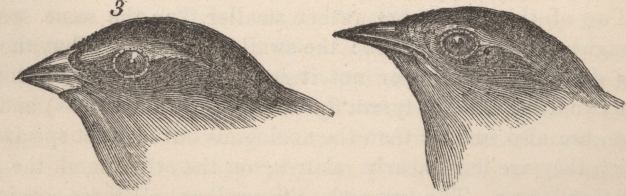
Natural selection, according to Clinton Community College is "one of several different mechanisms that cause evolutionary change in populations. Natural selection produces changes in the genetic composition of a population from one generation to the next. As a result, organisms become better adapted to their environment."  A perfect example of a natural selection is a duck, It has webbed feet to be able to live near the water and to live their life by the water. The webbed foot of a duck allows the duck to swim better than a foot that isn't webbed. Natural selection occurs because a species within a population differ, they are never the same, Some may have more reproductive success than others, and lastly the traits of the species are inherited down to the next generation of that species. If the area/ water where a duck is living is dirty and nasty then the ducks wont live a healthy life, or they will end up leaving that area, this is an example of how species population decreases. An example of how a species population would increase is if the duck family like a place and keep reproducing and coming back to that area, because other ducks will find this area as well that is also another way the population of that area will grow. Speculation, or the emergence of a new species over a period of time is "a very gradual mechanism of change within populations, and postulated that new species could be the product of this very same process, but over longer periods of time" An example of this is how over periods of time a birds beak changes over time like in the picture below of the two drawings of a bird. The Reasons why extinction occurs is because of us humans. We destroy an animals environment just to benefit ourselves for new buildings or food crops. Another big issue with extinction is because the climate is changing, we have colder winters and hotter summers and an animal cant adapt like they are supposed too.


A picture of a zebra/ horse that is now extinct.
http://listverse.com/2009/07/25/10-recently-extinct-animals/


A Ducks webbed feet is easier for them to swim then it is for them to walk. http://angelinaanthro.blogspot.com/2011_09_01_archive.html


Safran banner.
http://www.nature.com/scitable/knowledge/library/speciation-the-origin-of-new-species-26230527


Wednesday, June 11, 2014

PHet

1)   What are the 3 variables that can be changed in this simulation?  (Scale or zoom is a nice feature, but not a variable.)
          1. Temperature
2.  Composition
3.  Thickness  
2)   Try to duplicate the continental crust as accurately as possible. How did you set 
temperature: the Temperature is more warmer then it is cool
composition: made up mostly of silica.
thickness: The crust is thick.

3)  Try to duplicate the oceanic crust as accurately as possible.  How did you set 
temperature: The temperature is cool
composition: made up of more iron then it is silica
thickness: The crust is thin.

4)  In terms of the three variables you have investigated, describe how continental crust differs from oceanic crust.
 The continental crust is warmer, made up of silica and is thicker then the oceanic crust which is much cooler, made up more of iron and is thin.


Select the “Plate Motion” tab at the top of the screen.  Under view select “Both”.
8)   Investigate convergent boundaries (green arrows).  Report your findings in the following table:

Left Side Crust

Right Side Crust

Which Crust is Denser?

Which Crust Sub ducts?

Do non-volcanic Mountains Form?

Does a Trench Form?

On Which Crust Do Volcanoes Form?

Continental
Continental
right
Right
yes
no
N/a
Continental
Old
Ocean
Right
Right
no
no
Left
Old
Ocean
Continental
left
left
no
no
Right
Continental
Young Ocean
Right
Right
no
no
Left
Young Ocean
Continental
Left
left
no
no
Right
Old
Ocean
Young Ocean
Left
Left
yes
no
Right
Young Ocean
Old
Ocean
Right
Right
yes
no
Left
9)  Describe the relative motion of the plates at ALL convergent plate boundaries.  
All the plates collide into each other at a horizontal position. The more dense one always sub ducts into the other.


10)  Three times you used the same two types of crust, but switched left and right sides.  What do you observe about the results?  Is the side the crust is placed on important?
When switched sides the more dense crust switch sides and the volcanoes/ mountain switched sides as well. yes because it determines where a volcano or mountain will be formed.
11)          Look for patterns in density, subduction, and volcanoes in the table.  When volcanoes form, on which plate do they always form? 
The side that sub ducts is the side that is more dense. It is more dense because it sub ducts into the ground. volcanoes always form on the side that doesn't sub duct.


12)          Explore how a continental-young oceanic crust collision differs from a continental-old oceanic crust collision.
*  Describe the difference in the angle of subduction between old and new plates.
The young oceanic crust has a greater angle going into the ground then the old oceanic plate does.


*  How does the distance between the volcanoes and the plate boundary differ between old and new plates? 
with the new plates the volcanoes are closer to the edge of the two plates meeting then the old one is.

13)          Investigate divergent boundaries (red arrows).  Click show labels.  Describe the relative motion of ALL plates at divergent boundaries.  
The Divergent boundaries are the plates moving away from each other in a horizontal movement.

14)          What is generated at ALL divergent plate boundaries?  
More land and space is generated.

15)          Investigate transform fault boundaries (blue arrows).  Describe the relative motion of ALL plates at transform fault boundaries
  the transform movement is moving the plates in opposite direction but in a vertical direction.

Tuesday, May 6, 2014

Ways that water pollution occurs is that people dumb their garbage into the ocean or an oil spill occurs, killing many wildlife mammals and affects our food source. we cannot eat the fish that are contaminated with diseases from the oil or waste. We have to put our trash somewhere and that is in a landfill. In the landfill the waste and all the nasty things in the landfill seep into the ground and affect our natural ground water system. Little things such as CO2 that are put into the air from cars and big trucks can affect the water, CO2 gets into the air leaving back a smog that can kill fish and other animals that live in the water. Just like landfills we have a waste treatment plant where all of our feces go. If the treatment center isn't careful, the feces and the dirty water can go into the ground or near by river if it over flows. No one can drink or use this water, its disgusting and leaves so much bacteria behind. A point source of pollution is not limited to any pipe, ditch, channel, tunnel, conduit, well, discrete fissure, container, rolling stock, concentrated animal feeding operation, or vessel or other floating craft, from which pollutants are or may be discharged. A non point source is results from land runoff, precipitation, atmospheric deposition, drainage, seepage or hydrologic modification. ways to prevent water pollution is to recycle and to clean up your community. you could start a group that helps clean up trash around the roadside or the riverside to prevent more water pollution. water pollution first affects the animals living in the water then affects us because we cannot eat contaminated fish or sea food and we cannot drink contaminated water or else we can get very sick. we do not realize what we are doing is so bad for us in the long run. 


Wednesday, April 30, 2014

Solar energy

In the month if March 332 kilowatt hours were produced. 6 trees were saved. And 10.3 years of charging mobile phones. 

In the month of April 401 kilowatt hours were produced. 7 trees and 12.4 years of charging mobile phones. 

Today 3.6 kilowatt hours were produced. 

I think out solar panels are very neat and that they are wonderful for the environment and putting them into our school was a smart choice. Kids should learn about them through being shown how they work and how much they mean to the environment 

Wednesday, April 23, 2014

Footprint blog

http://footprintnetwork.org/en/index.php/GFN/page/calculators/

Yes the site is good for me and younger kids, it's very easy to work with and anyone can figure out how many earths they would use. You can do a more complex questions or simple questions. 

My foot print is 5.2 earths 

Myself 1. Walk more 2. Eat more localized food 3. Grow my own food 

The School 1. Turn off lights to save energy 2. Turn of computers 3. Turn off any unused electrical sources 

The Community 1. Have people walk instead of driving 2. Have people switch to natural gas 3. Start a community garden

The connections that the video has to our footprint is that in the movie it talks about how much resources we waste and how much out earth actually have. We are using so much resources without even thinking about it. We are killing our earth and we should change the way we live. 

Monday, March 31, 2014

Red planet posting

1. What I saw in the movie was that the men could breath on air, so I thought that we could breath on Mars. Dr platt says that the oxygen levels are far too low for them to be breathing especially when the bugs ate a lot of the algae. 
Another thing that I saw in the movie is that the commander could turn off gravity with a switch and I didn't think that it worked that way. Dr platt had proved what I thought, gravity can't be turned off and on with a switch 
I didn't think that there could be fire in space since there is no oxygen levels in space and in the movie it shows the commander trying to push the fire into space. Dr platt says that there could be fire but she as a character had to be weightless and she didn't show that.
I also saw in the movie that when they landed they landed pretty hard and since gravity is significantly less on mars they. Should have had a safer landing, or that's what I thought. Dr platt proves what I thought here as well. Gravity is less on mars so it wouldn't be as rough as a landing.
What I saw in the movie was they used a radio to communicate with the commander. What I thought was that since there are no radio towers in space and on mars they couldn't communicate but dr platt says that you can, but not from a radio that is 50 years old. 


I thought that the sky was blue because it reflects off the ocean. What I learned was that it's scattered blue light from the sun. 
I always thought that the North Star was the brightest star in the sky that lead you to home but what I learned is that it's only medium brightness and isn't the brightest star. 
I thought that the seasons change as the earth gets closer and further away from the sun. What I learned was that the seasons actually begin a month before then when we say they start and it's due to the solstice. 

Tuesday, March 25, 2014

First Post

1. What I already know about the internet and technology is that it is a very useful tool to use when doing research or when trying to contact with family. I know that everyday someone out there is trying to improve and create newer technology and newer inventions. I know how to use the internet in many ways, i know how to use it to make projects and write papers, i know how to use it to get on social media. Same with technology, i know most things and know how to use most technology. What i want to know is how to use work on a project together with someone using google docs.

2. What i want to know in global science is everything about the globe and the universe and how it effects us. I signed up for this class to know more about our earth and know more about basic sciences. I want to know how science is added to everyday life. I want to know how to use our planets resources and what they mean to the human life. I want to know what the constellations in the universe mean and what they symbolize and how they got their names.